Fiberglass & acrylic questions Berkeley owners ask
Why do fiberglass and acrylic tubs fade, yellow and craze?
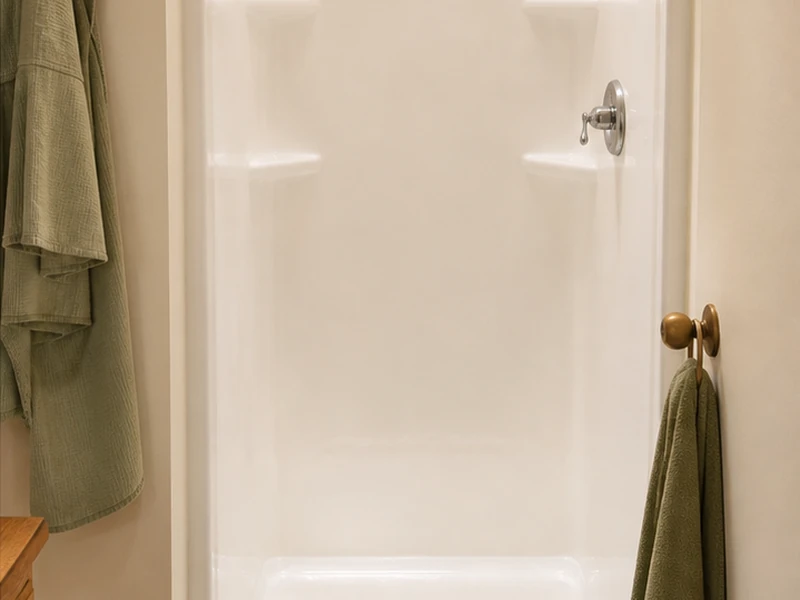
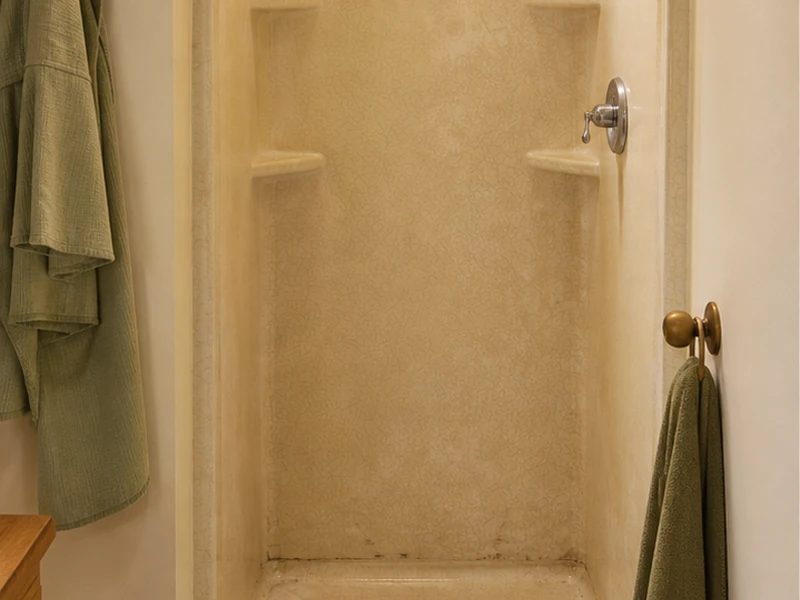
The gloss on a fiberglass tub is a thin molded resin skin called gelcoat. Years of hot water, cleaners and light break it down: it oxidizes to a chalky dull surface, almond and bone colors yellow, and the gelcoat develops crazing — fine spiderweb cracks you can see but barely feel.
Crazing is the gelcoat shrinking and stress-cracking as it ages, not dirt, which is why scrubbing never restores the shine. Once that surface is gone it is gone — there is no polishing it back. Refinishing works because it lays a fresh acrylic-urethane skin over the sound gelcoat underneath, sealing the crazing and giving you a new, even gloss. Most of the faded almond and bone combos we see in West Berkeley fourplexes and Southside rentals are 1980s and 1990s gelcoat that has simply worn out on the surface while the shell is still solid.
My fiberglass tub floor flexes — can that be fixed before refinishing?
Yes, and it has to be. A floor that gives or feels like a trampoline when you step in is unsupported underneath. Coating over a moving floor guarantees the new finish cracks, so we reinforce the substrate from below first, then refinish over a solid base.
Reinforcement means bonding rigid backing — a structural foam or a backer board kit — into the void under the tub floor so it stops deflecting. Once the floor is firm underfoot, the acrylic-urethane has a stable surface to bond to and behaves like a finish over a solid shell. Skip that step and no coating, ours or a kit's, survives the flex. This is the single most common reason a previous DIY refinish on a Westbrae or West Berkeley rental tub cracked down the center within months.
Can spider cracks and stress cracks be repaired?
Fine surface crazing is sealed by the new topcoat. Anything wider than about ¼ inch, or an open stress crack or small hole, needs structural reinforcement before refinishing — typically a bonded fiberglass mesh or filler patch that ties the crack back together so it cannot keep moving.
- Hairline crazing: filled and sealed under the acrylic-urethane topcoat.
- Cracks wider than ¼" or open holes: reinforced with mesh or a bonded patch, sanded flush, then refinished.
- Cracks fed by a flexing floor: the floor is reinforced first, or the repair simply re-cracks.
When is a fiberglass tub too far gone to refinish?
Some fiberglass tubs are not worth saving, and we will tell you so at the quote rather than take a job that will fail. A shell that has gone thin and brittle, a floor cracked clean through, or large sections of delaminated gelcoat point to replacement instead of refinishing.
Cheaper 1980s and 1990s units in some Berkeley rentals were molded thin, and after decades they can crack in multiple places or feel fragile across the whole floor. When the structure itself is failing, a new surface coat only hides the problem for a season. Honest cases like that are rare — most faded combos are perfectly refinishable — but where a tub is genuinely past saving, we say so and point you toward replacement rather than sell you a finish that will not hold.
Can you refinish a fiberglass tub-and-shower combo to match?
Yes. A one-piece fiberglass tub-and-shower combo is refinished as a single unit so the tub and the surround end up the same even gloss, with no seam in color between the bathing area and the walls. It is the most common job we do in Berkeley's apartment stock.
The walls of a combo craze and yellow on the same timeline as the tub floor, so refinishing only the tub leaves an obvious two-tone unit. We scuff-sand the whole shell, treat it with an adhesion promoter and spray the tub and surround together. If your shower is a separate stall or a tiled enclosure rather than a molded combo, the approach differs — see our Berkeley shower refinishing page.
Is spraying a coating in an apartment bathroom safe, and what product do you use?
It is, because the chemistry is managed rather than ignored. A two-part acrylic-urethane hardens through an isocyanate reaction over the 24–48 hour cure, and uncured isocyanates are a respiratory sensitizer carried on California's Proposition 65 list — which is precisely why Diego Sanchez sprays in a supplied-air or organic-vapor respirator with the room ventilated and keeps you out of the unit until it has cured.
In a West Berkeley fourplex or a tight Southside rental, that control matters more, not less, because the bathroom shares air with the rest of the unit. We spray a low-VOC acrylic-urethane meeting the CARB and BAAQMD ceilings, lay it with an HVLP gun that keeps mist out of the air, and contain the overspray inside the masked zone. That is the honest answer to why a hardware-store kit is the riskier choice on a fiberglass tub: rolling one on in an unventilated apartment bath puts an untrained homeowner next to the same isocyanate chemistry we handle with equipment, ventilation and a compliant product.
 Berkeley Tub Reglazing StudioEst. 2014 · Berkeley, CA